



















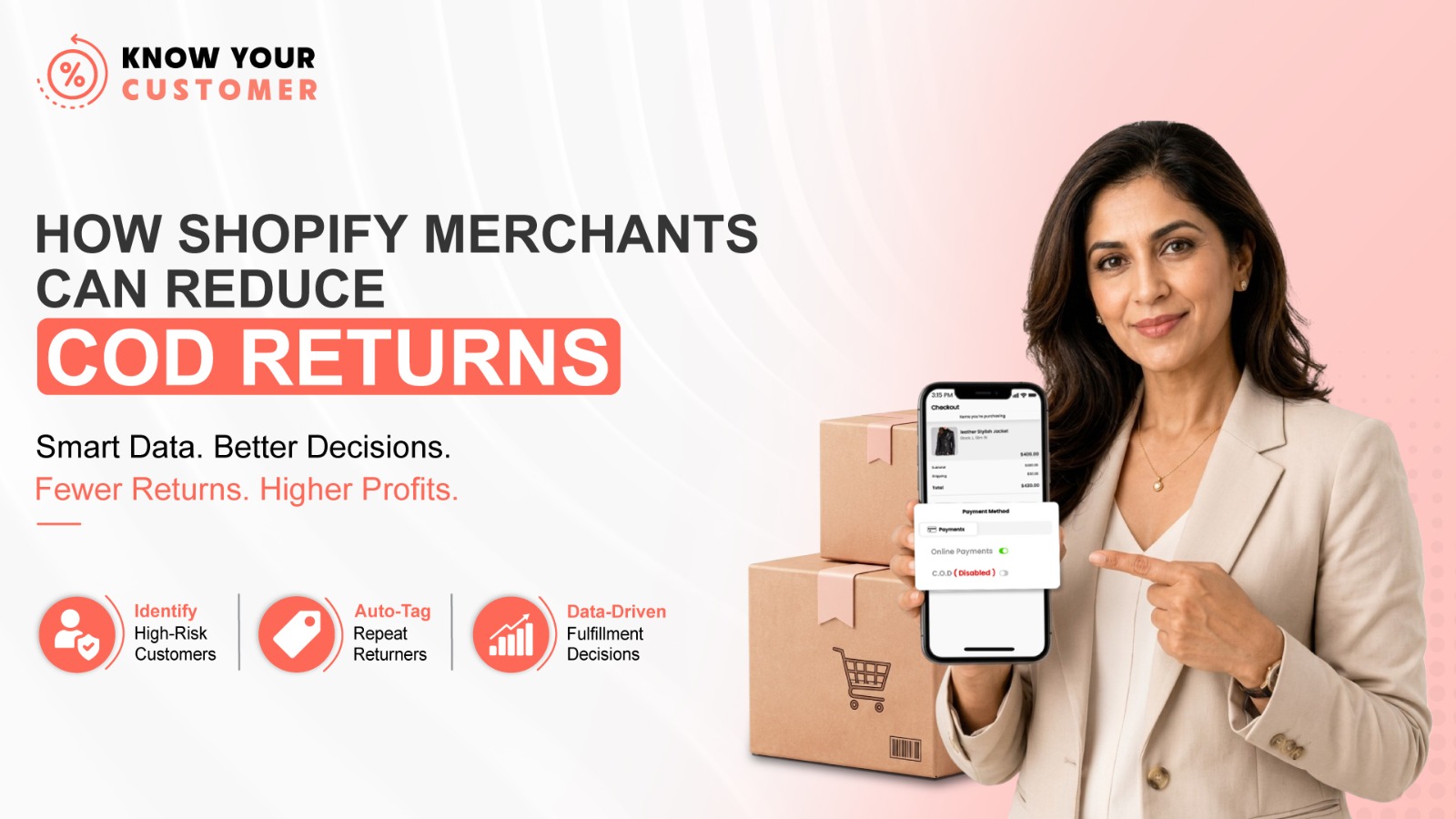
How Shopify Merchants Can Reduce COD Returns
Cash on Delivery (COD) remains one of the most popular payment methods for eCommerce businesses, especially in markets where customers prefer paying after receiving their orders. While COD can help increase conversions and attract more customers, it often comes with a significant challenge: high return rates.
For Shopify merchants, frequent COD returns can lead to increased shipping costs, inventory management issues, and reduced profitability. Fortunately, by understanding customer behavior and implementing data-driven strategies, merchants can significantly reduce COD returns and improve order quality.
Why COD Returns Are a Major Challenge for Shopify Merchants
Unlike prepaid orders, COD orders typically involve a higher risk of order rejection, non-delivery, or customer refusal upon delivery. Some customers may place impulsive orders without a strong purchase intent, while others may repeatedly order products and return them.
Common reasons for COD returns include:
- Customers changing their minds after placing an order
- Fake or fraudulent orders
- Repeat return behavior
- Incorrect contact information
- Lack of commitment due to no upfront payment
- Delivery refusal at the doorstep
These issues not only increase logistics costs but also affect operational efficiency and profit margins.
The Financial Impact of High COD Return Rates
Every returned COD order can create multiple expenses for merchants, including:
Shipping Costs
Businesses often pay for both forward and return shipping, even when no sale is completed.
Inventory Handling
Returned products require inspection, repackaging, and restocking, increasing operational workload.
Reduced Profit Margins
Frequent returns can quickly eat into profits, especially for businesses with low-margin products.
Fulfillment Delays
High return volumes can disrupt warehouse operations and delay legitimate customer orders. Because of these challenges, reducing COD returns should be a priority for every Shopify merchant.
Identify High-Risk Customers Before Fulfillment
One of the most effective ways to reduce COD returns is by identifying customers who have a history of frequent returns.
Instead of treating every order equally, merchants can analyze customer behavior to determine whether an order carries a higher risk of being returned.
mportant indicators include:
- Number of previous returns
- Return-to-order ratio
- Purchase history
- Order frequency
- Repeat delivery refusals
By reviewing these metrics before fulfillment, merchants can make more informed decisions and prioritize reliable customers.
Use Customer Return Data to Improve Order Quality
Customer behavior often reveals patterns that can help merchants prevent unnecessary returns.
For example, if a customer has placed ten orders and returned six of them, there is a strong likelihood that future COD orders may also be returned.
Tracking return ratios allows merchants to:
- Identify repeat returners
- Flag suspicious order behavior
- Improve fulfillment decision-making
- Reduce unnecessary shipping expenses
Data-driven order management helps businesses focus resources on customers who are more likely to complete purchases successfully.
Automatically Tag Customers With Frequent Returns
Manually reviewing customer histories can become difficult as a store grows.
Automated customer tagging simplifies this process by identifying customers who exceed specific return thresholds.
Benefits of automatic tagging include:
- Faster order reviews
- Improved team efficiency
- Better risk management
When customer profiles are automatically tagged based on return behavior, fulfillment teams can quickly assess potential risks before shipping an order.
Create a Data-Driven Fulfillment Strategy
A successful fulfillment strategy is not based solely on order volume, it should also consider customer quality.
Merchants who incorporate customer insights into fulfillment decisions can:
- Reduce shipping losses
- Improve delivery success rates
- Lower return percentages
- Increase operational efficiency
Analyzing customer behavior before fulfillment allows businesses to allocate resources more effectively and focus on profitable orders.
How KYC | Know Your Customer Helps Reduce COD Returns
KYC | Know Your Customer is designed to help Shopify merchants identify risky customers and make smarter fulfillment decisions.
The app provides valuable customer insights by:
- Tracking customer return behavior
- Calculating return order ratios
- Identifying repeat returners
- Automatically tagging high-risk customers
- Helping merchants evaluate order quality
- Supporting COD restrictions for repeat returners on Shopify Plus
By giving merchants a clearer picture of customer behavior, KYC | Know Your Customer helps reduce return-related losses and improve overall store performance.
Conclusion
COD can be an effective payment option for increasing conversions, but unmanaged COD returns can quickly impact profitability. The key to reducing return rates lies in understanding customer behavior and making smarter fulfillment decisions based on reliable data.
By tracking return history, analyzing return ratios, identifying repeat returners, and proactively managing high-risk orders, Shopify merchants can significantly reduce COD-related losses. Solutions like KYC | Know Your Customer makes this process easier by providing actionable customer insights that help businesses improve order quality, protect profits, and build a more sustainable eCommerce operation.