

The empty box scam and the missing item scam cost you the product and the refund at the same time. Here is how a short packing video proves exactly what you shipped and ends the argument in seconds.
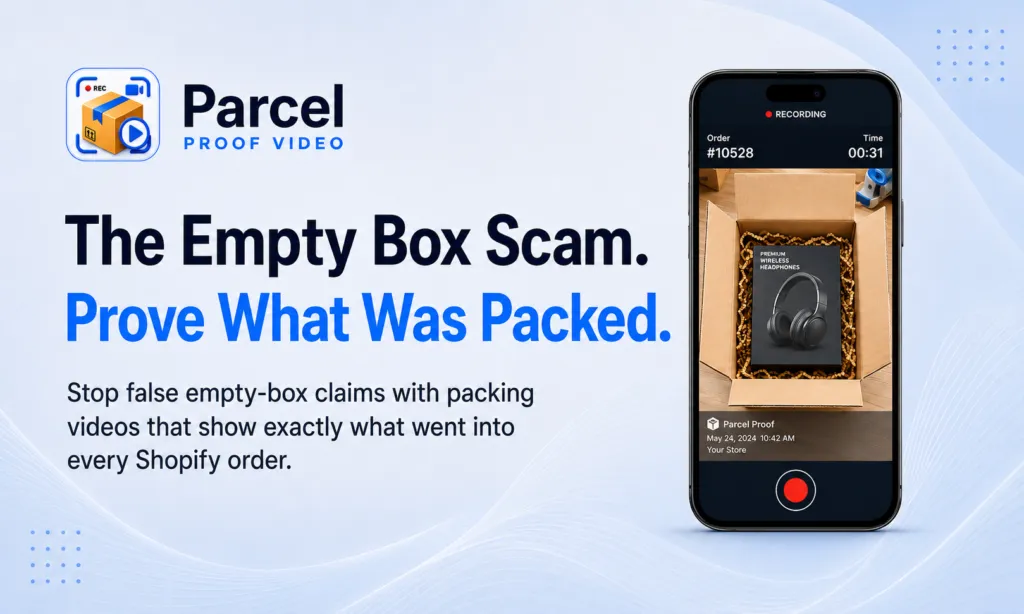
Parcel Proof Video records a short packing video for each order, capturing the one moment nobody else does: the product going into the box before it is sealed.
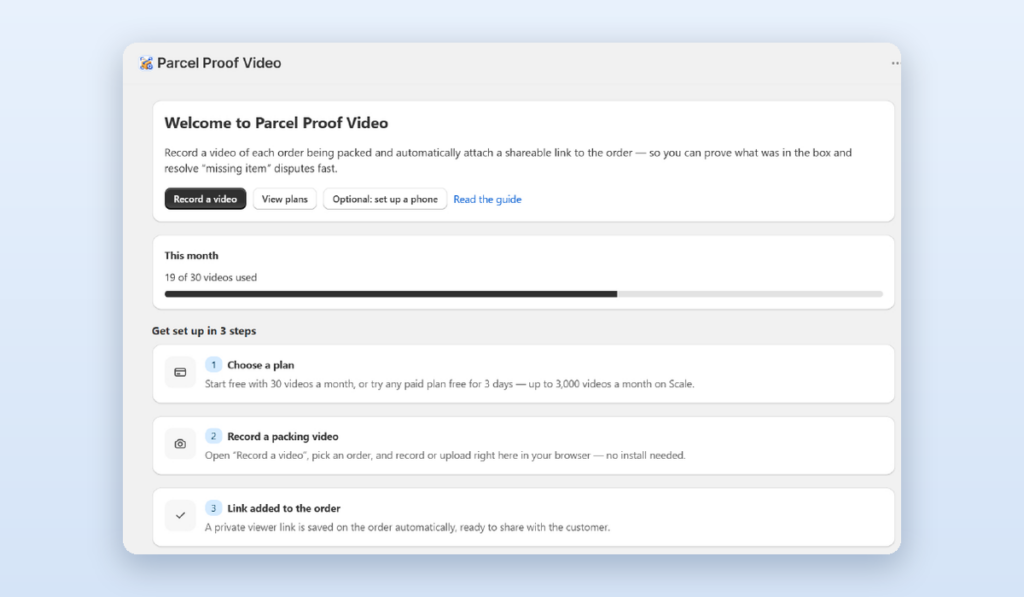
A message lands in your inbox that every Shopify seller dreads. The customer says the box arrived empty, or that an item was missing, or that the wrong thing was inside. You know you packed it correctly, but you cannot prove it, so you refund the money and lose the product too. This is the empty box scamand it is one of the most common and most frustrating problems in ecommerce because it is so hard to disprove. This guide explains how the missing item scam works, why the usual evidence never settles it, and how a short packing video recorded with Parcel Proof Video lets you prove exactly what was in the package.
If you have ever searched for what to do when a customer says the package was emptyyou already know the answer most articles give you is weak. Match the address, keep the tracking, hope the buyer is honest. That advice does nothing when someone opens the parcel, sees the item, and claims it never arrived. The only thing that reliably ends the argument is showing the moment the product went into the box and the box was sealed. That is what a packing video does, and this article walks through the whole method step by step.
What you will learn
- How the empty box scam and the missing item scam actually work
- Why photos, packing notes, warehouse CCTV, and carrier weight rarely win the claim
- The one piece of evidence that proves what was in the package
- How to record a packing video for Shopify orders in about thirty seconds
- A word for word way to reply when a customer says the box was empty
- How to use the same clip as item not received and chargeback proof
What is the empty box scam?
The empty box scam is a return and refund scam where a buyer receives a parcel, then claims the box arrived empty, was missing an item, or contained the wrong product, in order to keep the goods and get their money back. It works because the seller usually cannot show what went into the box before it was sealed. The tracking proves a parcel was delivered, but it says nothing about the contents, and that single gap is exactly where the scam lives.
A close cousin is the missing item scamwhere an order contains several products and the buyer claims one or two were not in the parcel. It is even easier to allege than an empty box, because a partial refund feels reasonable to a support team under pressure, so many stores simply pay it to make the complaint go away. Multiply that by hundreds of orders a month and the quiet losses add up fast.
It is important to be fair here, because not every claim is a scam. Sometimes a packer really does miss an item, a courier really does damage a parcel, and an honest customer really does receive an empty box. That is the whole problem. Without proof you cannot tell an honest complaint from a dishonest one, so you either refuse genuine customers and damage your reputation, or you refund everyone and pay for the dishonest few. Proof is the only thing that lets you treat both groups correctly.
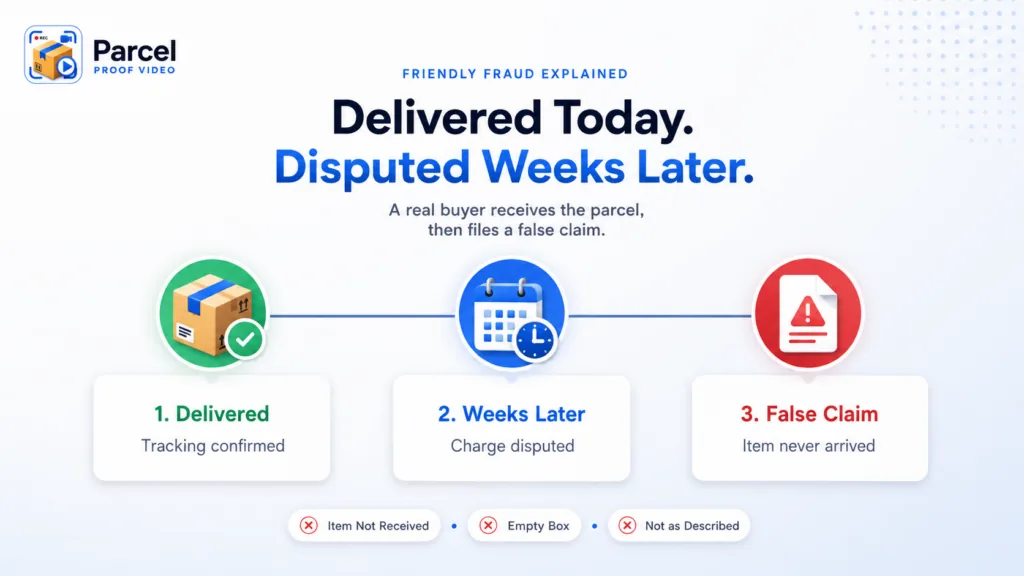
How the scam usually unfolds. The parcel is delivered, some time passes, and then a claim arrives that the box was empty or an item was missing. Without proof of packing the seller has no way to answer it.
Why it targets you specifically
Scammers look for stores that ship valuable goods and cannot prove their packing. A jewellery, electronics, cosmetics, or collectibles store is a natural target because the payoff for a false empty box claim is large. The moment a store starts recording and referencing packing videos, that store stops being an easy mark and the claims quietly move elsewhere.
What an empty box claim really costs you
Most sellers count the refund and stop there, but the true cost of a single empty box claim is much larger. First you lose the product, because the buyer keeps the item you shipped. Then you lose the money, because you refund the order. So one false claim costs you twice, not once. On a high value order that can wipe out the profit from many honest sales.
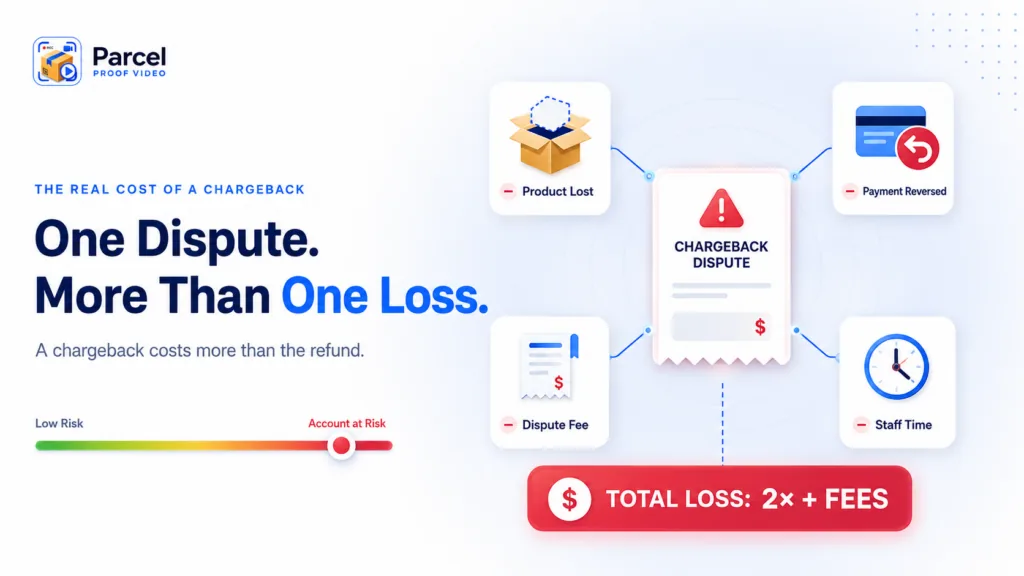
One claim is rarely one loss. You lose the product and the refund, plus staff time, possible chargeback fees, and the review a frustrated buyer leaves while the case is open.
Then come the costs that never show up on the refund line. Staff time disappears into every missing item disputebecause a person has to leave the packing bench, dig through notes, and write careful replies. Payment fees pile on if the claim becomes a chargeback, since card networks add a fee whether you win or lose. And a one star review often lands while the case is still open, which keeps costing you sales long after the parcel is forgotten. The refund is only the part of the bill you can see.
2xYou lose the product and the refund, so one claim can cost double the item value
15mStaff time spent on a single dispute, gathering notes and replying back and forth on a single dispute
1 starThe review a frustrated buyer often leaves while the case is still unresolved
Why it is so hard to prove what was in a package
The reason the empty box scam works is simple. In a normal shipping workflow there is no record of the contents at the moment the parcel is sealed. Everything you can point to happens either before packing or after it, and none of it answers the one question a dispute reviewer asks, which is what was in the package when it left your hands. Sellers reach for the tools they have, but each one leaves the same gap.
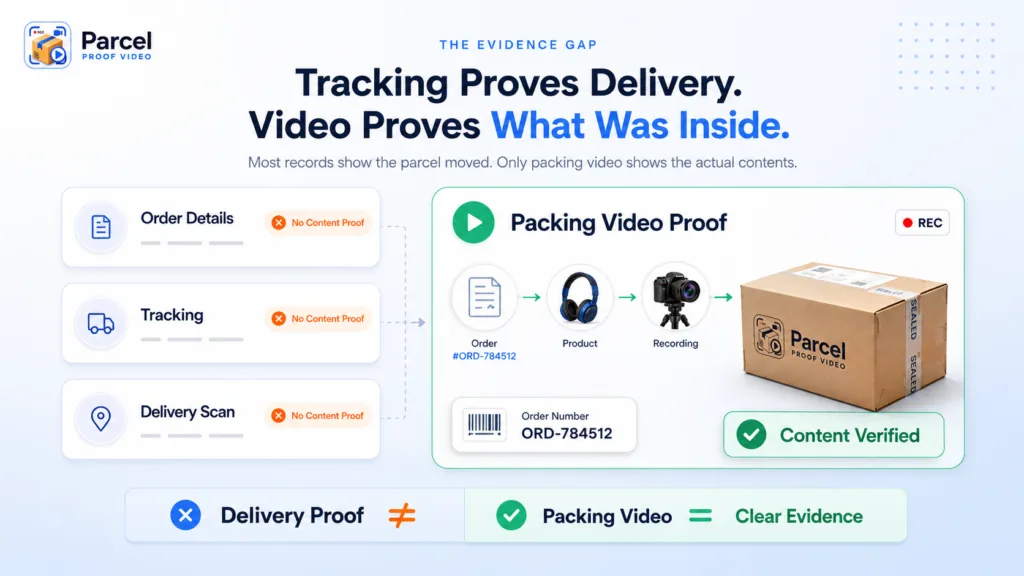
Tracking, photos, notes, and CCTV all sit either side of the one moment that matters. None of them show the product going into the box and the box being sealed.
- Tracking and proof of delivery. These prove a parcel moved and arrived, which is useful against a pure item not received claim. But they say nothing about what was inside, so an empty box story sails right past them.
- A packing photo. A still photo can be taken before the box is sealed, so a reviewer can argue the item was removed after the picture. A photo also cannot be tied to the specific shipment with any certainty.
- Handwritten notes or a checklist. These are your own word in another form. They are easy to write after the fact and carry almost no weight in a formal dispute.
- Warehouse CCTV. Security cameras record by time and by camera, not by order. Finding the exact clip for one order inside a tight claim window is slow and often impossible, and the footage rarely shows the order number anyway.
- Carrier weight data. Weight can hint that a box was not empty, but on its own it is circumstantial, and most platforms will not decide a refund on weight alone.
Notice the pattern. Every one of these sits either before the pack or after it. The single moment that actually decides the case, the product going into the box and the box being sealed, is the one moment nobody is recording. Close that gap and the whole scam stops working.
The one thing that proves what was in the package
A packing video is a short recording that shows one order being packed from start to finish, capturing the order number, the product, and the exact moment the parcel is sealed. It is the only common form of evidence that covers the gap every other method leaves open, because it records the contents at the moment of sealing rather than before or after.
The easiest way to picture it is a receipt that moves. A paper receipt lists what should be in a box. A packing video for Shopify orders shows what truly went into the box, in real time, with nothing edited out and nothing left to memory. When a buyer later says the box arrived empty, you are no longer arguing about feelings or good intentions. You are playing a clip that shows their order number and their product going into the sealed parcel.
We already trust this kind of footage everywhere else. You film a parking scrape for your insurer, a shop keeps a camera running behind the till, and a courier photographs your doorstep the second a parcel is dropped. Parcel Proof Video simply brings that same common sense to the one moment that matters most for an online store, the moment the product leaves your hands. It is a Shopify packing video app built to make that recording effortless and to attach it to the right order automatically.
Why a packing video beats every other proof
- It shows the actual contents, not just that a parcel moved
- It captures the moment of sealing, closing the gap photos and notes leave open
- It is stamped with the order number and date, so it ties to one specific order
- It captures the moment of sealing, closing the gap photos and notes leave open
- It works for an empty box claim, a missing item dispute, an item not received claim, and a chargeback
How to record a packing video for every order
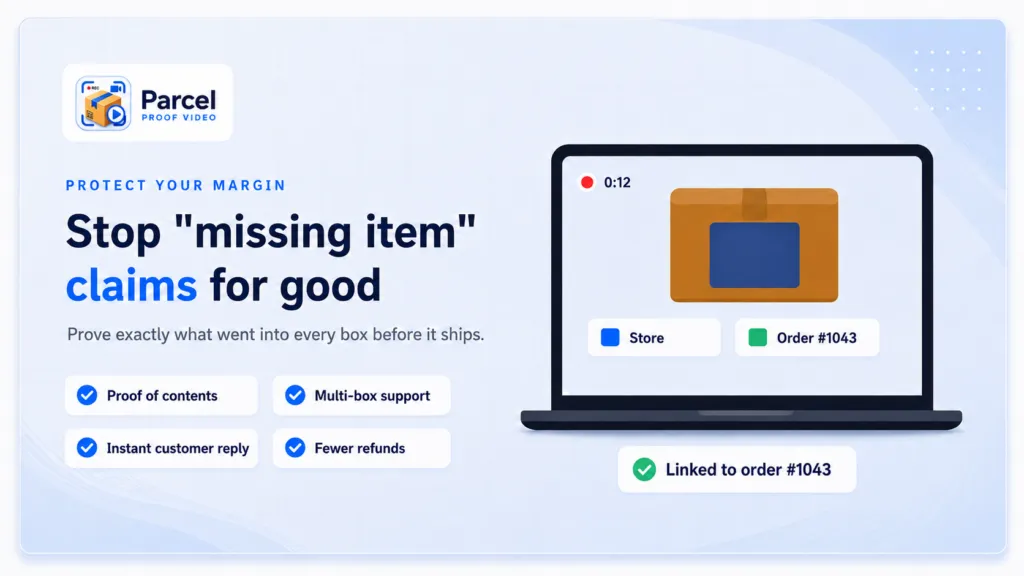
The whole method only works if recording is fast enough to do on every order you care about, so Parcel Proof Video is built around two plain steps. You pick the order, then you record. Inside your Shopify admin you open the Record a video screen, type or select the order, and either record straight from your camera or upload a clip you already filmed. When the recording finishes it uploads on its own and links to the order, so there is no naming of files and no matching clips to orders later.
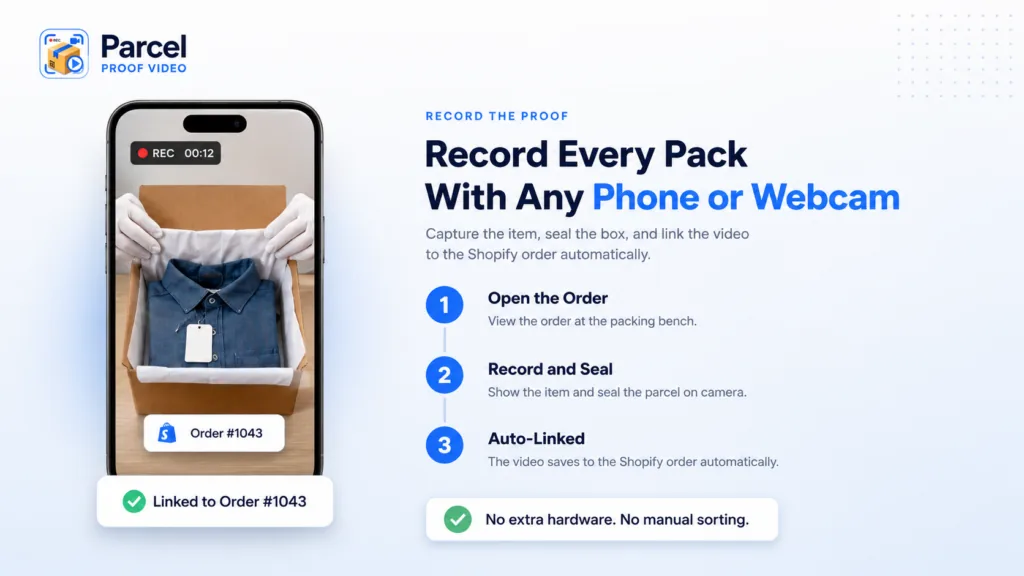
Pick the order, record the pack, and the clip links to the order by itself. On a computer the camera opens at the bench, and on a phone it opens the phone camera.
At a fixed bench with a webcam
If your team packs at a fixed station with a computer, a webcam is the smoothest path. You open the order in the admin, the camera view appears on screen, and you pack the item in front of it. There is nothing to install and no file to move. Because the camera stays in one place pointed at the packing zone, every clip has the same clean framing, which is exactly the consistency that makes proof reliable at scale.
On a phone when you pack from anywhere
Plenty of stores pack from a kitchen table or a different spot every day, and for them the phone already in a pocket is the fastest way to start. You open the order, tap record, pack the item into view, and tap stop. For higher volume packing there is an optional Android app that pairs to each packer phone with a code, so a whole warehouse team can record proof that still flows into the same place inside Shopify.
Make the video trustworthy with a watermark
Proof is only as strong as it is believable, so every clip can carry a watermark. In Parcel Proof Video you choose to stamp your store name, the Shopify order number, the customer name, and the date and time onto the shared video page, and you control the placement and opacity. A watermark shows at a glance that the clip is genuine and tied to a real order on a real day, and it stops anyone from passing off an unrelated video as proof.
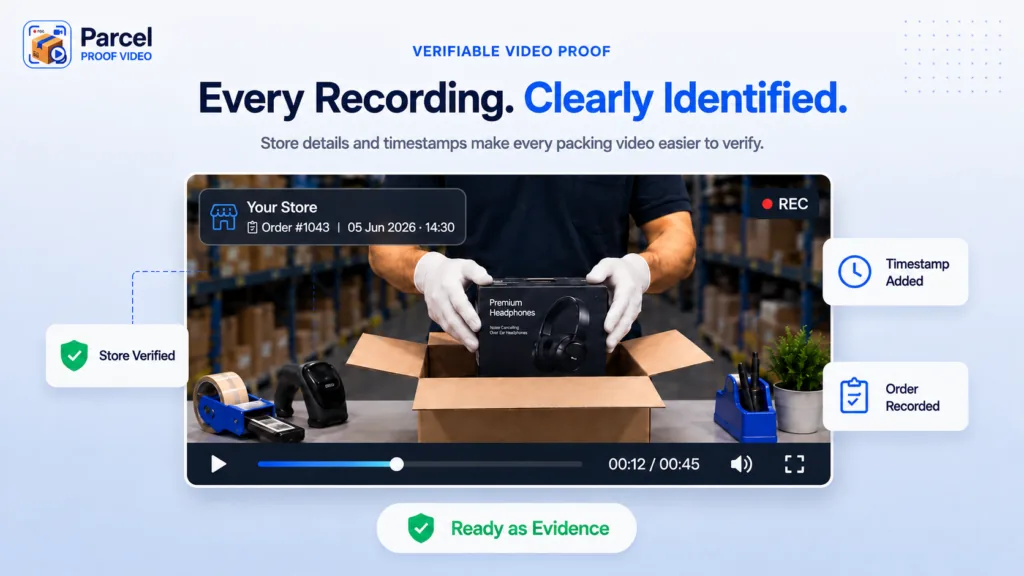
A watermark ties each clip to one order on one day. Store name, order number, customer name, and a timestamp turn a plain recording into evidence that stands up.
You also decide how long clips are kept before they delete automatically, so your proof matches your return and dispute windows rather than a generic default. A store that ships expensive items with a long return window keeps videos longer, while a fast moving low cost store keeps them for a shorter time. This is what turns a pile of recordings into a proof of packing policy that fits how your store actually ships.
How to respond when a customer says the box was empty
When a claim lands, the difference between a fast win and a long argument is having the proof already attached to the order. Because every clip links to its order automatically, your reply takes seconds. Here is the exact sequence to follow when a customer says the package was empty or an item was missing.
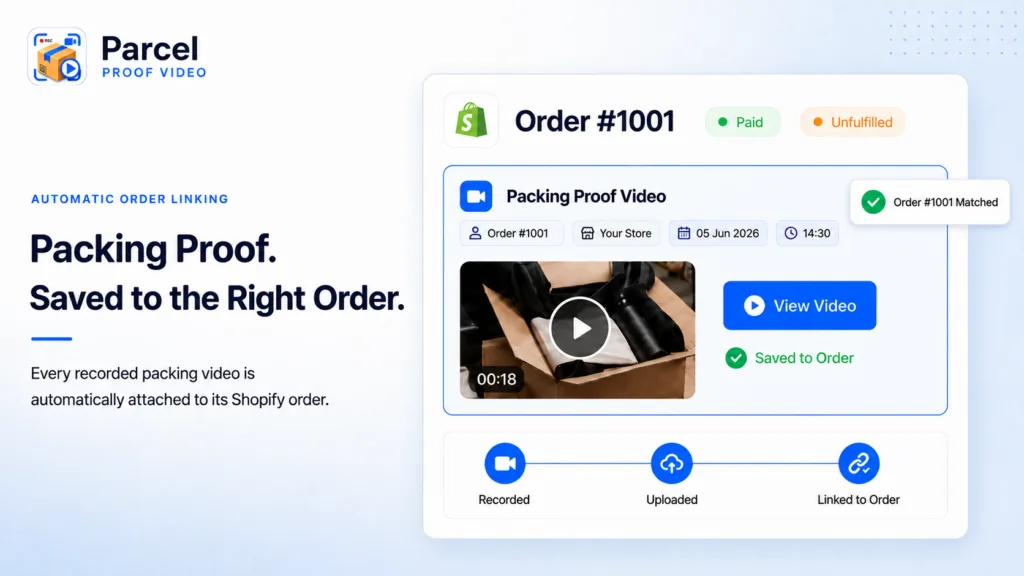
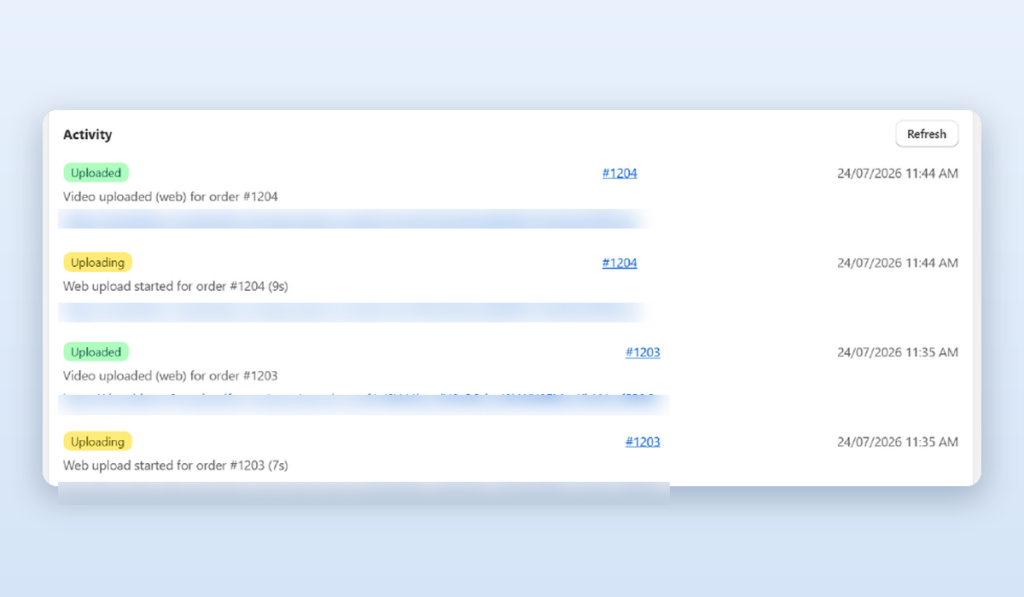
Every clip is saved to the order and listed in the activity log with a private link. When a claim arrives, the proof is already waiting, matched and timestamped.
- Open the order or the activity log. Find the order the buyer is disputing. The packing video is already attached through an order metafield, so there is nothing to search for.
- Play the clip yourself first. Confirm it clearly shows the order number and the product going into the sealed box. If it shows a genuine mistake, refund or replace with goodwill, because proof cuts both ways.
- Copy the private proof link. Each viewer link is private and hard to guess, and the customer needs no account to open it.
- Reply calmly and share the link. Keep it short and kind. A simple line works well: “Thanks for reaching out. Here is a video of your order, {order number}, being packed and sealed, so we can look at this together.” Then paste the link.
- Point to the moment that matters. Tell them exactly where in the clip the order number and product appear, so there is no confusion.
What usually happens next
Most honest disputes end the moment the buyer sees their own order number and product going into the box, because the story no longer holds together in front of the footage. Genuine mistakes get settled quickly and kindly, and false claims quietly disappear. Either way the conversation is shorter, fairer, and far less stressful for everyone.
Using the same video as item not received and chargeback proof
Sometimes a buyer skips the conversation and goes straight to their bank, filing a chargeback or an item not received claim. This is one of the most stressful disputes of all, because a stranger at the card network decides the outcome based only on the evidence each side submits. Strong evidence wins and weak evidence loses, and a clear packing video is some of the strongest evidence a small store can provide.
When you respond to a chargeback you usually attach order details, tracking, and any proof of delivery. Those documents show that a parcel was addressed and moved, but they cannot show what was inside it. Adding a packing video that shows the product and the order number going into the sealed parcel closes that final gap. It proves the item existed, matched the order, and left your store. Paired with tracking that shows the parcel was delivered, your case becomes genuinely hard to argue against.
Card networks judge these cases on whether you provided what they call compelling evidence that the customer received what they ordered. A watermarked packing video is close to the definition of compelling evidence, because it is specific, dated, and tied to the exact order under dispute rather than a generic policy statement. Place that clip beside a delivery scan and the original order confirmation, and you hand the reviewer a complete story with no gap for reasonable doubt.
Prevention: stop being an easy target in the first place
The best outcome is not winning disputes, it is never receiving the false ones at all. Recording packing videos changes how your store is seen from the outside. A visible proof of packing policy tells opportunists that an empty box story will not work here, and it tells honest customers that you stand behind every parcel. Both messages lower your claim rate over time.
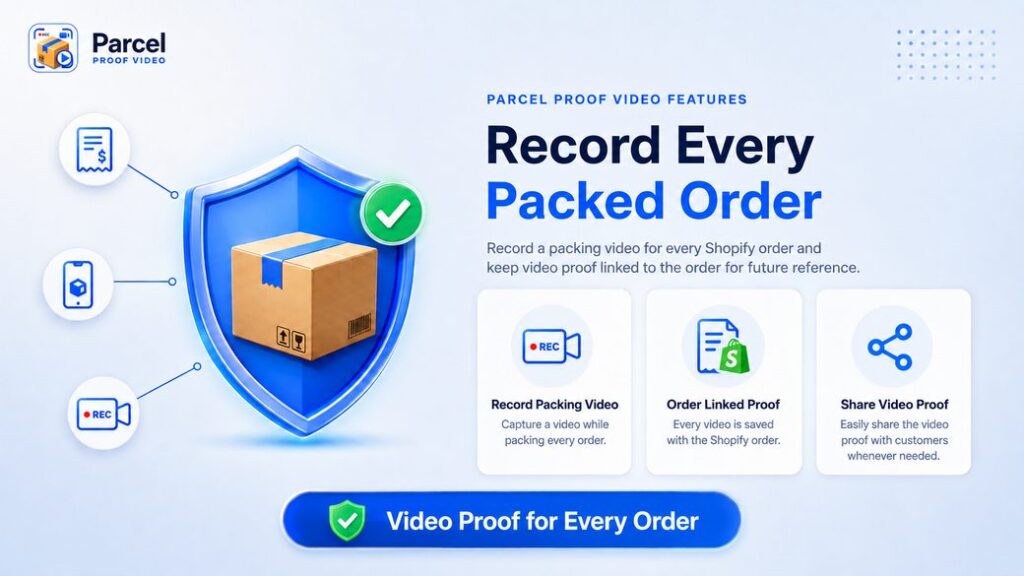
Prevention is a habit, not a one off. Record the orders most likely to be disputed, watermark every clip, and mention your packing video policy where buyers can see it.
- Record the risky orders first. Start with high value orders and known problem products, then expand to every order once the routine feels natural.
- Say it out loud. A short line on your shipping or returns page that every order is recorded for quality and proof is a quiet deterrent on its own.
- Keep the proof organised. Because each clip attaches to its order automatically, your evidence is complete even during your busiest week, which is exactly when disputes appear.
- Make it a team habit. Record the pack as naturally as you tape the box. After the first week most teams stop thinking about the step at all.
Best practices for a packing video that wins
The difference between a clip that ends a dispute and one that leaves room for doubt comes down to a few small habits. None of them slow the line once they become second nature.
- Show the order number first. Bring the picking slip or the screen into view at the start so the clip is tied to the order beyond any question.
- Keep the product in frame the whole time. Do not let the item leave the shot between showing it and placing it in the box, so there is no gap a reviewer could doubt.
- Light the bench well. A bright, even packing area makes labels, colours, and quantities easy to read on camera.
- Seal on camera. Let the final frame be the closed, taped parcel, so there is no space between packing and shipping.
- Do not edit. One continuous take is far stronger proof than a clip that looks trimmed or joined together.
- Keep it short. Twenty to forty seconds is plenty for most orders and keeps your packing line moving.
Packing video proof versus the old way
Many stores try to solve these claims with photos, notes, or plain memory. Those methods help a little, but they all leave the one gap that actually decides a case, which is showing the product going into the sealed box in real time. Here is how a proper packing video compares with the common alternatives.
| Situation | Photo or note only | Packing video proof |
|---|---|---|
| Empty box claim | Hard to disprove | Clip shows the item sealed inside |
| Missing item dispute | Your word against theirs | Every item visible on camera |
| Wrong item sent | A photo may not match the order | Order number and product both shown |
| Item not received | Tracking only, no contents | Contents plus tracking together |
| Chargeback reply | Thin evidence | Strong, dated, watermarked proof |
| Finding the proof later | Search folders by hand | Attached to the order in Shopify |
Getting started and what it costs
Every store ships a different number of parcels, so Parcel Proof Video scales with your volume rather than force one size on everyone. A free plan lets a smaller store record a monthly allowance of short clips at no cost, which is enough to protect the orders most likely to be disputed. As you grow, paid plans raise the number of videos, lengthen the maximum clip, and increase the resolution, and each paid plan comes with a short free trial so you can prove the value before you commit.
Start free and record the orders most likely to be disputed. Move up when your volume calls for it, and let the first won dispute pay for the plan.
Because proof pays off most on the orders that get disputed, many stores begin by recording high value orders and known problem products, then expand to every order once the first won claim has paid for the whole year. If you have ever refunded an order you were sure you packed correctly, this is the habit that stops it happening again.
The takeaway
- The empty box scam works because sellers cannot prove what was in the package
- Tracking, photos, notes, and CCTV all miss the moment of sealing
- A short packing video closes that gap and ties the contents to the order
- The same clip settles a missing item dispute, an item not received claim, and a chargeback
- Recording proof lowers your claim rate because it removes the easy target
Frequently asked questions
What is the empty box scam?It is a refund scam where a buyer receives a parcel, then claims the box arrived empty, was missing an item, or held the wrong product, so they keep the goods and get their money back. It works because most sellers cannot show what went into the box before it was sealed.
How do I prove what was in a package I shipped?Record a short packing video that shows the order number and the product going into the box and the box being sealed. Tracking proves a parcel moved, but only a packing video proves the contents. Parcel Proof Video records this inside your Shopify admin and links the clip to the order automatically.
What should I do when a customer says the box was empty?Open the order, play the packing video to confirm the contents, then reply calmly and share the private proof link, pointing to the moment the order number and product appear. If the clip shows a genuine mistake, refund or replace with goodwill. If it shows a full pack, the false claim usually ends there.
Does recording a packing video slow down my team?No. A packing video takes about the same time as taping the box, roughly twenty to forty seconds per order. Because the clip links to the order on its own, there is no extra sorting or uploading work later, and most teams stop noticing the step within the first week.
Can I use a packing video as chargeback and item not received proof?Yes. A watermarked packing video that shows the order number and product going into the sealed box is strong, compelling evidence. Attach the private video link alongside your tracking and delivery proof when you respond to the dispute.
Do I need to install anything to start recording?No. You can record or upload straight from your browser on the Record a video screen with no install at all. The optional Android app is only there for warehouses that want to record from packers phones at scale, and it pairs with a simple code.
Stop losing the product and the refund
Parcel Proof Video records a watermarked packing video for every Shopify order and saves a private proof link to the order, so you can prove what was in the package and settle claims in seconds. The first won dispute usually pays for the whole year.
Add Parcel Proof Video